Six realms, quests, and returning characters
Carries worldbuilding and unlocks new content.


Perfect World · Interaction Planning Internship · 2026
During a three-month interaction planning internship with Perfect World’s Zhu Xian 2 team, I audited the equipment reroll system, identified 13 interaction and information issues, redesigned four core interfaces, and validated the flow through two rounds of user testing.
Decision support for high-risk rerolling
The redesign keeps the underlying values and drop logic intact while making recommendations explainable, material goals traceable, and irreversible actions safer.
SYSTEM UX · INTERACTION PLANNING · USER TESTING
The proposal does not alter values, drop rates, or equipment rules. It restructures the interaction flow and information hierarchy so players can understand materials, risk, recommendations, and results before committing.
01 · System Audit
Zhu Xian 2 is a multi-platform MMORPG whose character-growth layer connects equipment, realms, artifacts, formation spirits, and the broader resource economy. Equipment rerolling sits directly inside the daily growth loop: acquire resources, invest, gain combat power, enter harder content, and improve acquisition efficiency.
I mapped the current system and documented 13 interaction and information issues. The recurring pattern was not missing functionality; it was missing evidence at the moments when players had to decide.
PRODUCT POSITION
Set one thousand years after the original Zhu Xian story, the multi-platform MMORPG combines IP narrative, an open world, real-time combat, character growth, life skills, multiplayer relationships, and long-term events. Its three design goals are to extend the IP, build character growth through realms, equipment, artifacts, formation spirits, and related systems, and sustain stable multiplayer relationships under one cultivation-themed language.
Carries worldbuilding and unlocks new content.
Creates the repeated moment-to-moment play loop.
Converts resources into combat power and build choices.
Moves resources between play, exchange, and growth.
Builds persistent multiplayer relationships.
Sets the cadence for returning and progressing.
Dependency chain · World narrative opens activities → activities produce resources → resources enter growth systems → growth supports competition → scheduled content regulates the rhythm.
GROWTH MODEL
Unlocks systems instead of simply stacking values.
Forms the baseline combat-power layer.
Creates configurable builds; equipment rerolling sits here.
Adds long-term collection goals.
The game contains single-battle, daily-growth, periodic-cooperation, and long-term-content loops. Daily growth carries foundational retention: players acquire resources, invest them, raise combat power, unlock harder content, and return with better acquisition efficiency.
Story · daily tasks · dungeons
Equipment · artifacts
Values and build strength increase
Higher challenge becomes available
The available activity set expands
Better returns restart the loop
System tensions observed · free cultivation versus a unified combat-power score; open world versus quest containers; free class switching versus specialization; life skills versus combat attributes; and long-term goals versus system expansion.
CURRENT EQUIPMENT FLOW
Main screen → More → Equipment → overview and equipment schemes → equipment detail, bag, comparison, and settings.
Open forging → preview the effect and special effect → choose whether to use protection → forge → inspect the result.
Choose the source equipment → choose the receiving equipment → confirm transfer → inspect the result.
Open stones → select a stone → review upgrade requirements → upgrade → inspect the result.
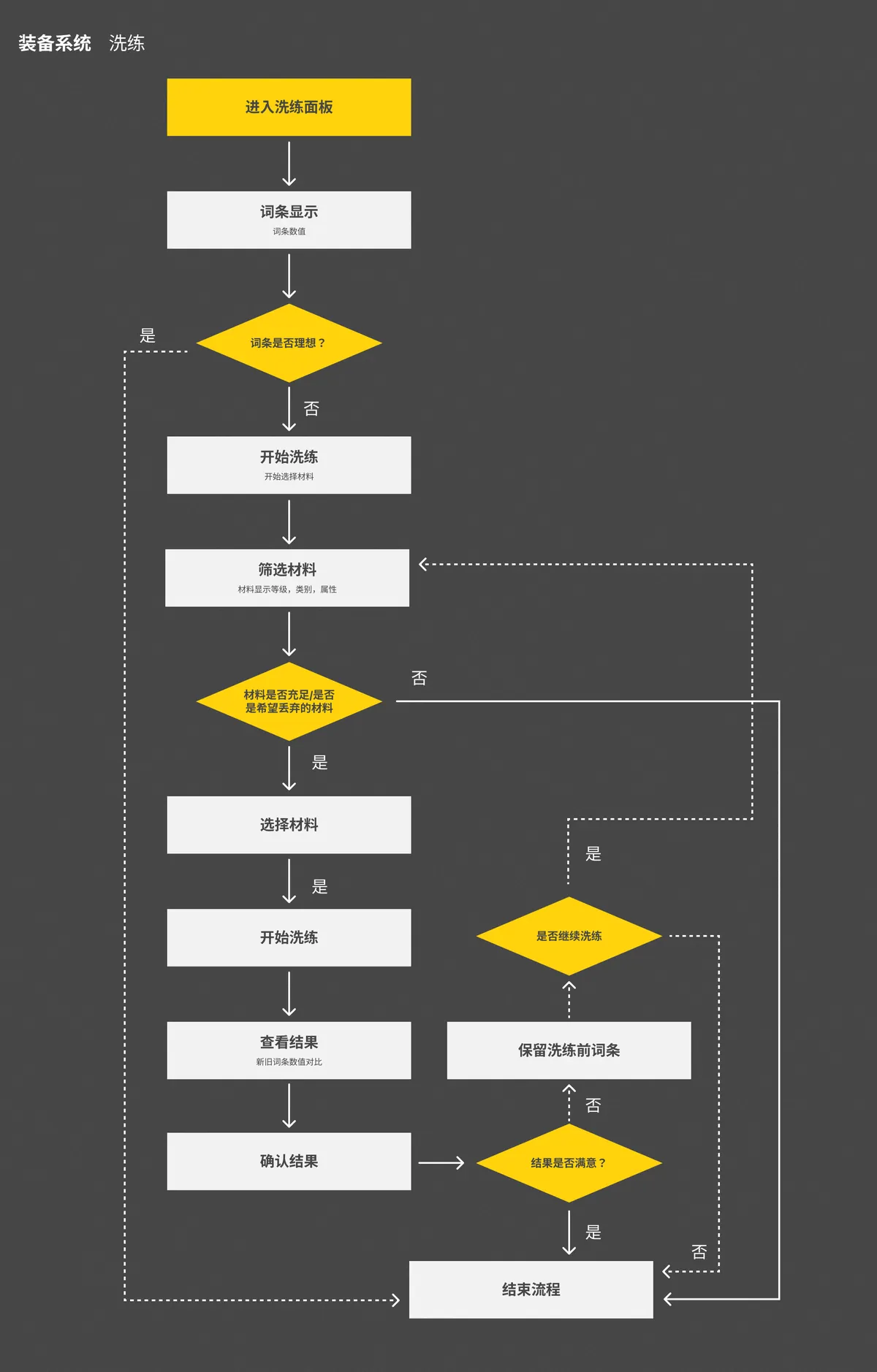
Open rerolling → start → filter by equipment level → select material equipment → reroll → inspect the result.
The module also contains material selection variants, reroll preview, equipment detail, inventory, equipment comparison, and settings screens.
Interaction and information issues across selection, confirmation, results, and repeated attempts.
Reroll main screen, material selection, consumption confirmation, and result preview.
A V1 diagnostic round followed by a fresh V2 validation round.
Every participant completed all four core validation tasks.

Equipment, resources, combat power, and content progression form one loop, so each reroll decision affects more than a single screen.
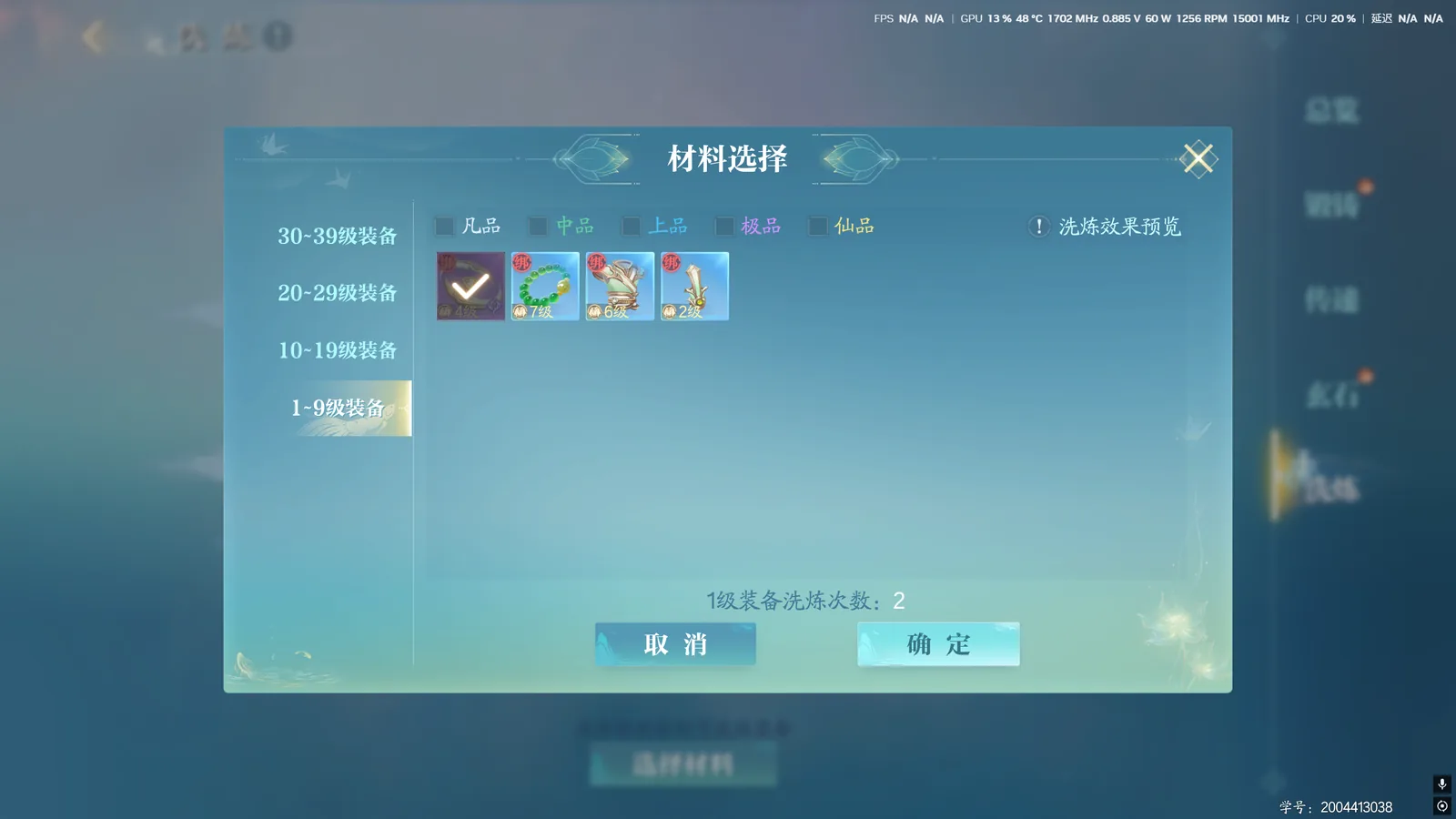
Players see selectable equipment, but filters, protection, recommendation reasons, and consumption consequences are not sufficiently visible.

Score feedback appears after rerolling, but the interface does not provide a direct old-and-new comparison or a clear next action.
PRIORITIZED ISSUE INVENTORY
After players selected material equipment, there was no warning that it would be destroyed and no second confirmation. Selection immediately consumed the item and could not be undone; the frequency of accidental loss still required live-data validation.
Different equipment and reroll materials provide different attempt counts, yet the chosen item could not be replaced or cancelled. A single mistaken selection could consume a valuable item without recovery.
Traits appeared on a single equipment page, suggesting that each item owned its own traits. In fact, rerolling refreshes the whole trait set, but the interface never explains that rule.
Traits showed only text and values. With no quality or type hierarchy, the total combat-power increase was the only reference and was not enough for a newcomer to judge whether a trait was worth keeping.
The random attribute range depends on the level of the invested equipment, not directly on the material level; and rerolling changes the whole set rather than one equipment part or one isolated trait. Both facts were absent from the interface.
After filtering by level, the label “Level-30 equipment reroll attempts” did not explain who owned the attempts, whether each level had a separate limit, or how results carried across levels.
The preview summarized all attributes but did not connect the result to a specific item or confirm when it had been saved and applied. Result ownership and timing remained uncertain.
Players could act only on equipped or stored items. Newcomers who needed replacement equipment had no visible route to obtain it, so the growth path stopped at the overview.
The transfer-source list displayed all forged equipment without distinguishing the equipped or strongest set, making obsolete source equipment harder to find.
Equipped status and scheme ownership were shown only as small text after an item was selected. Players had to open items one by one instead of judging from the list.
The interface could label an item or trait as recommended, but did not explain why it matched the current build or decision.
A total value replaced a side-by-side comparison, forcing players to remember the previous result before deciding what to keep.
Players had to leave the panel to look for materials and reconstruct the reroll context before trying again.
Core diagnosis · Players could not judge whether a trait was good, which materials were safe to consume, whether the new result was better, or how to retry efficiently. The system therefore replaced player judgment instead of supporting it.
02 · Decision Gaps
No filters, locks, recommendation reason, or clear warning made accidental equipment loss possible.
Trait quality and the logic behind recommendations were not legible enough to support a choice.
A total score replaced a clear old-versus-new comparison, and the word “Save” was ambiguous.
Running out of materials forced players to leave the panel and rebuild context elsewhere.
03 · Competitive Analysis
I compared only the equipment-affix reroll flows in Zhu Xian 2 and Yanyun Sixteen Sounds. The useful difference was not visual polish. Yanyun exposed the trait pool, tier, recommendation logic, old-and-new comparison, confirmation, and material sources at the point of need.
Show why an item or trait is recommended instead of asking the player to trust a badge.
Keep material sources and acquisition paths connected to the current task.
Use clear warnings, confirmation, comparison, or recovery wherever the cost is irreversible.
The analysis informed decision support while preserving Zhu Xian 2’s own rules and interface language.
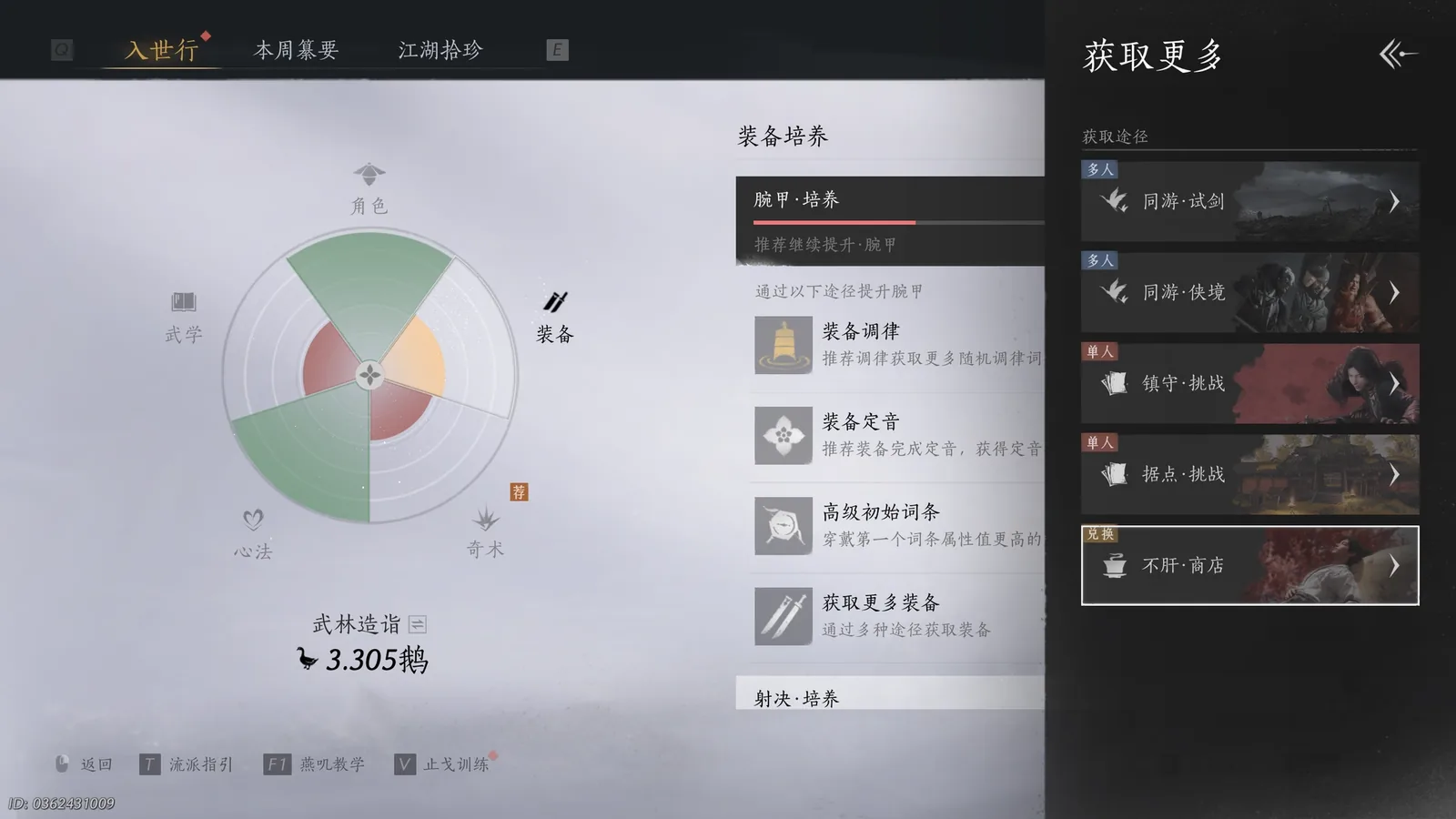
Trait overview and growth guidance show what can improve before the player invests.
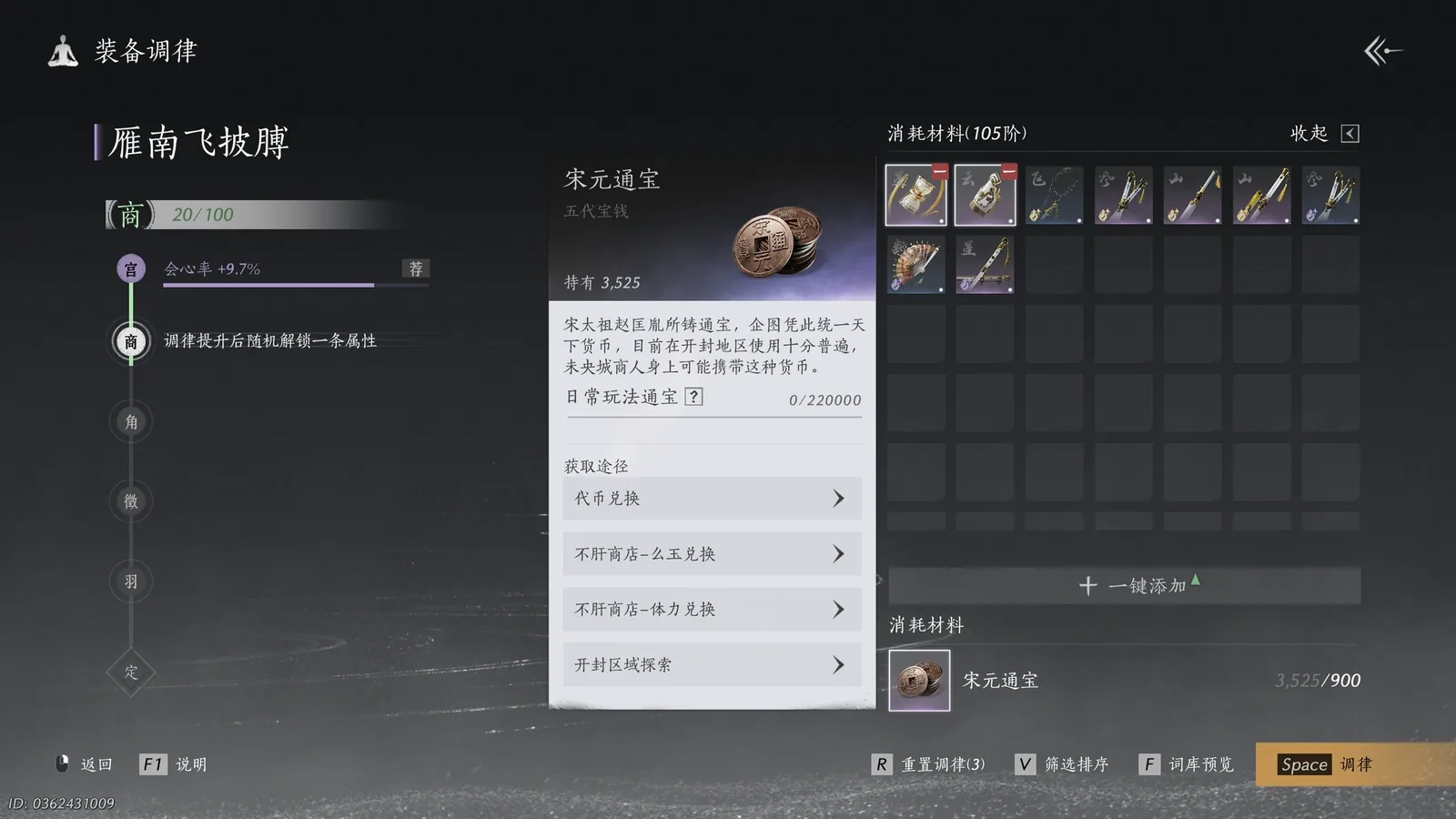
Dungeon, shop, and reward sources remain attached to the current upgrade objective.
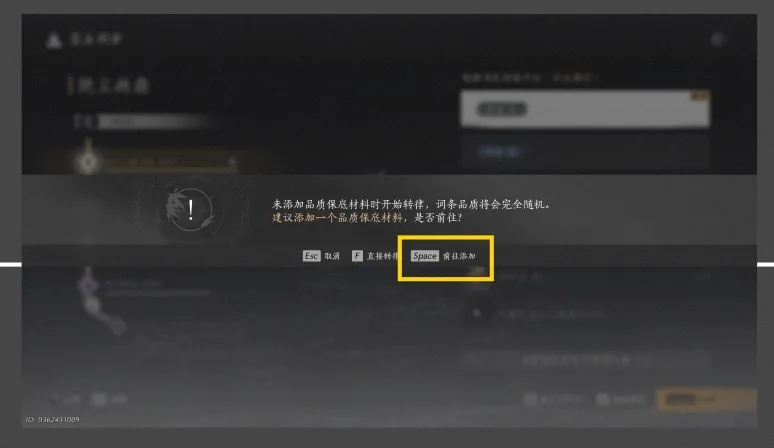
The confirmation identifies the irreversible cost and the exact action being approved.
04 · Flow Redesign
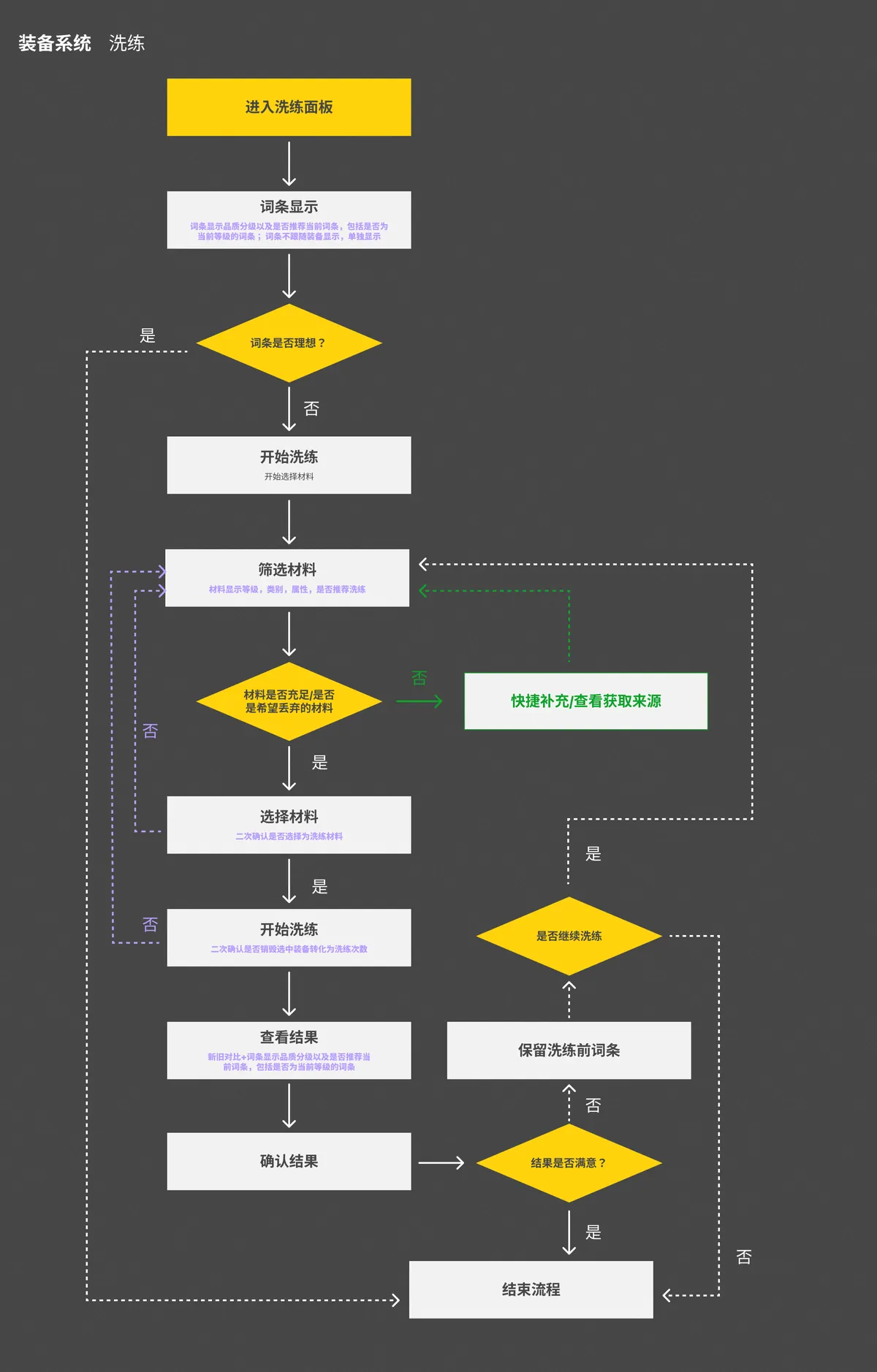
Before rerolling, players should know what the equipment can produce, what counts as a good trait, and where the current result sits. Afterwards, they should know whether the result improved and feel confident keeping, discarding, or rerolling it. The interaction sequence remains based on Zhu Xian 2’s existing flow.
The original path delegated too much judgment to the system and broke when resources ran out. The proposed path adds recommendation explanations, filtering, a material-source shortcut, a consumption confirmation, a direct old-and-new comparison, and a clear route into another reroll.
DECISION AND CONFIRMATION MATRIX
PROPOSED PLAYER JOURNEY
Open the reroll panel and review the overall trait panel before deciding whether the equipment can improve.
Change · quality color, recommendation badge, and value ratioFilter by level and quality, identify usable materials, and distinguish equipped items from safe choices.
Change · recommendations and equipped items shown disabledWhen materials are insufficient, use Get More to see where they come from and how many can be earned.
Change · source shortcut and empty-state guidanceReview the selected materials, then confirm that equipment will be destroyed and converted into reroll attempts.
Change · two confirmation safeguardsCompare old and new traits, then keep the old result, keep the new result, or reroll again.
Change · differences, tiers, recommendations, and remaining attempts05 · Core Interfaces
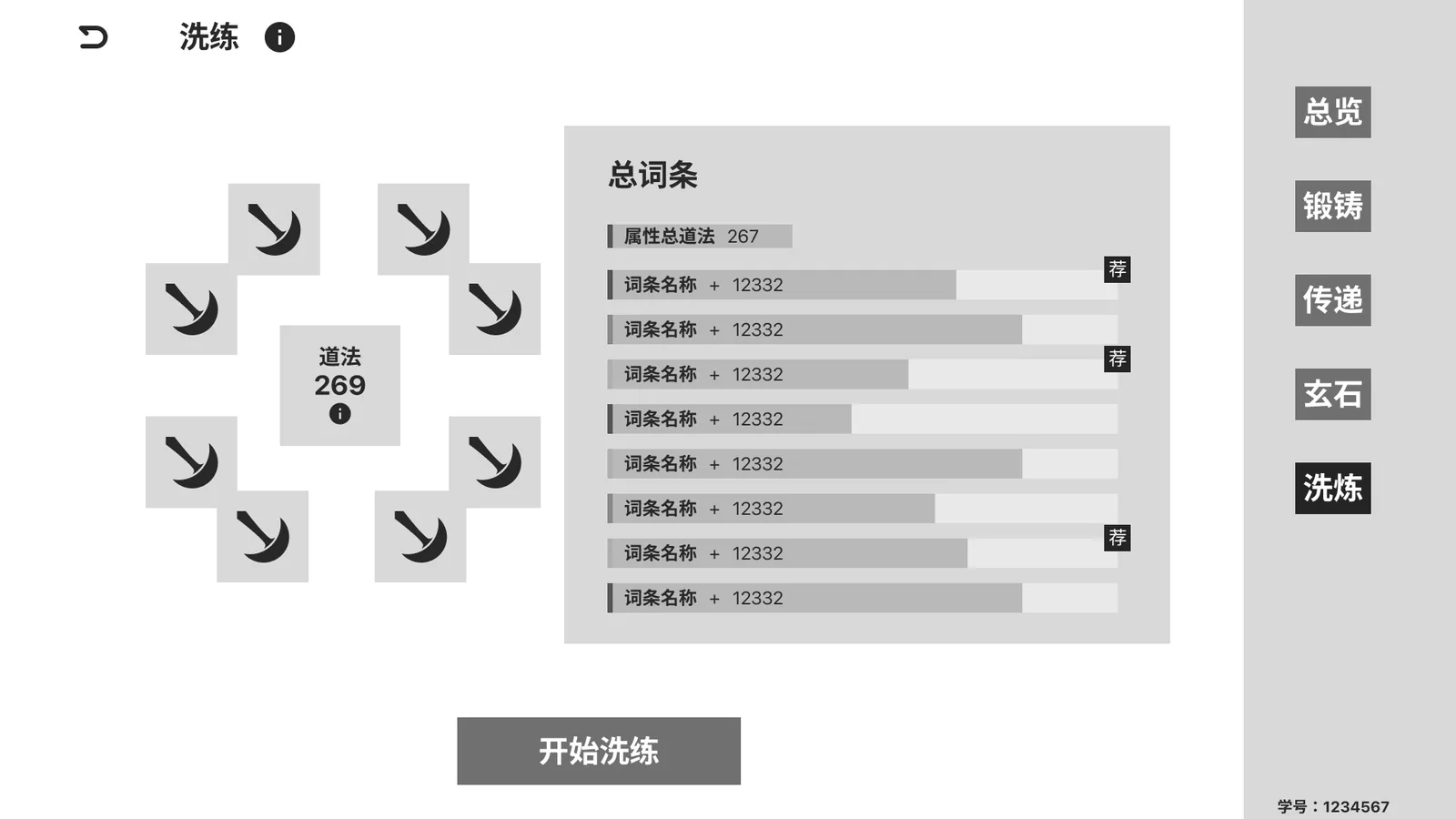
The main screen keeps equipment, total traits, remaining attempts, selected materials, and the primary action within one stable workspace.
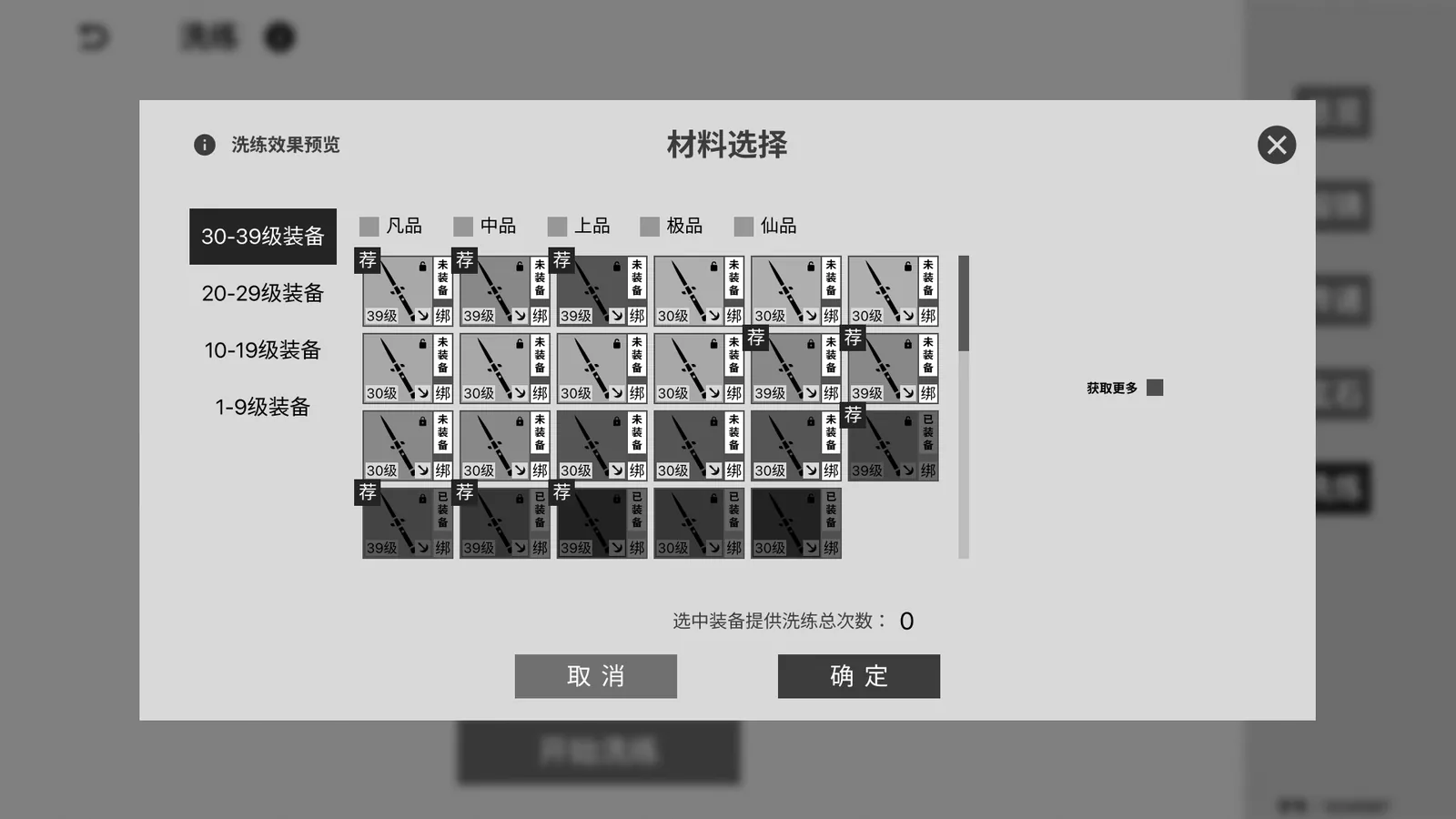
Level filters, multi-select states, recommendation explanations, equipment details, and an acquisition shortcut make sacrifice decisions reviewable.
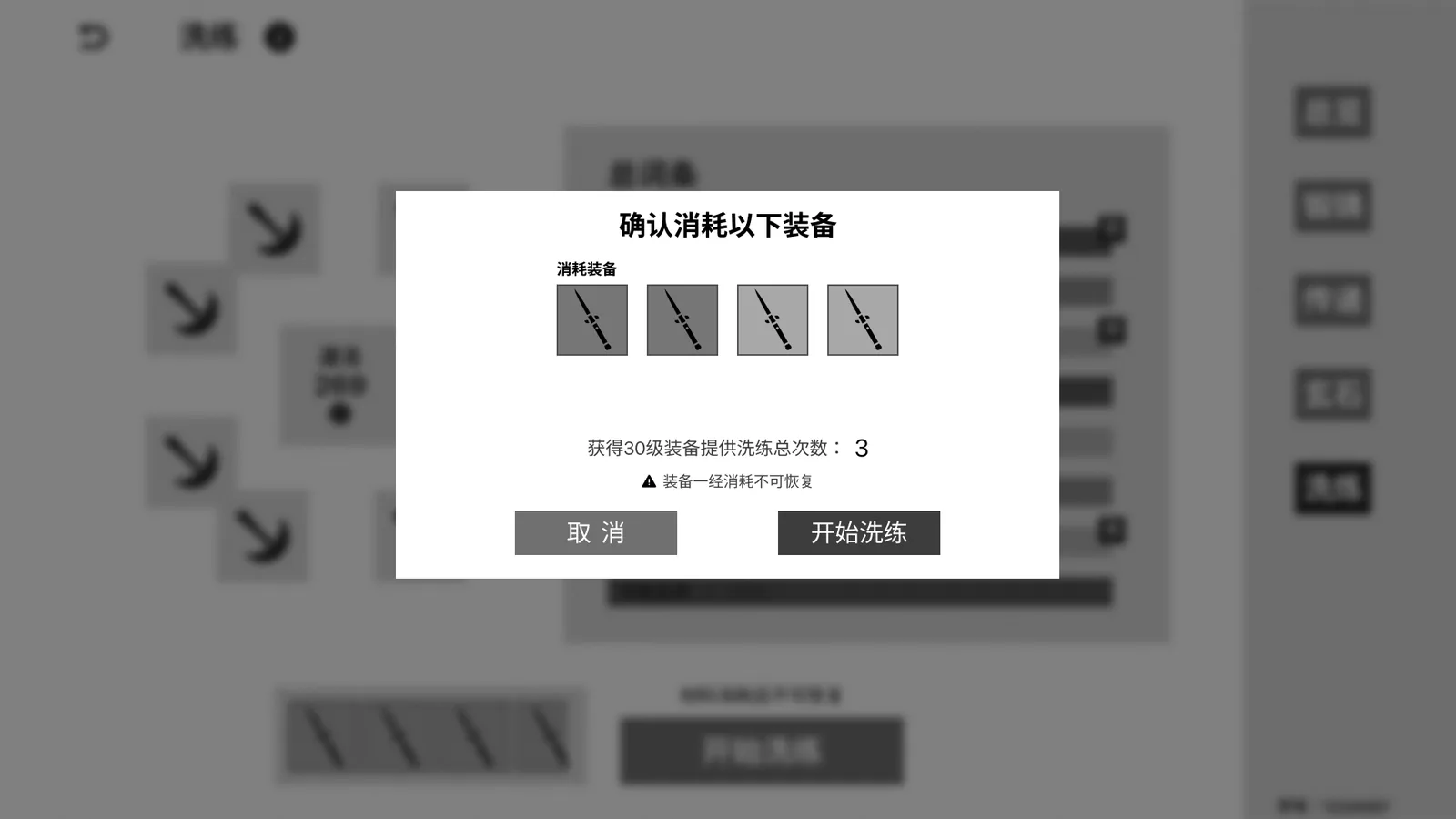
A dedicated confirmation names the equipment being consumed, the attempts it creates, and the fact that the action cannot be undone.
Old and new traits appear side by side. The actions say “Keep old traits” and “Keep new traits,” while the repeat action stays visible.
06 · Interactive MVP
I turned the proposal into a clickable MVP and used small-scale user testing to iterate. V1.0 was the pre-test version; V2.0 incorporated the findings from V1. The browser-based MVP lets reviewers switch versions, complete material selection and consumption, compare reroll results, and test the added acquisition loop.
The prototype opens as a standalone subpage in a new tab, so the full task flow can be tested without leaving this case study.
07 · User Testing
Each round involved six participants: five players with MMO experience and one newcomer. In V1, the experienced group included two frequent reroll users and three general players. Participants completed an individual think-aloud task walkthrough followed by a short interview, with each session lasting about ten minutes. V2 was tested with six fresh participants who had not joined V1.
Can players explain why a recommended trait is worth keeping, understand that selected equipment will be consumed, and correctly choose between the old and new result?
Read a recommended trait and explain it; select a material and predict what happens next; then interpret the result actions and choose what to keep.
I recorded task completion, time spent at each step, blocker locations, mistaken actions, and spontaneous interpretation of interface labels.
Each participant completed the flow alone, verbalized their thinking, and joined a short post-task interview. All blockers were recorded.
V1 TEST EVIDENCE
Participants could not tell whether the button kept the old or new traits.
Participants did not understand that selected equipment would be consumed.
The badge existed, but its reason was unavailable at the decision point.
Players could not find more materials and return to the same reroll task.
Dungeon, shop, and task channels create a route out and back to rerolling.
Hovering or focusing the badge reveals why the item is recommended.
Equipment first becomes reroll attempts; the attempts are then spent, matching the mental model shown on screen.
“Keep old traits,” “Keep new traits,” “Start reroll,” and “Reroll again” state the result of each action.
V2 completed the acquisition loop: when materials are insufficient, players can open an independent source page, choose Secret-Realm Dungeon, Shop Exchange, or Training Tasks, preview rewards and remaining attempts, complete acquisition, and return with the new materials. The result page also supports Claim and Reroll the Challenge, while the reroll screen changes its primary action between Start Reroll and Reroll Again.
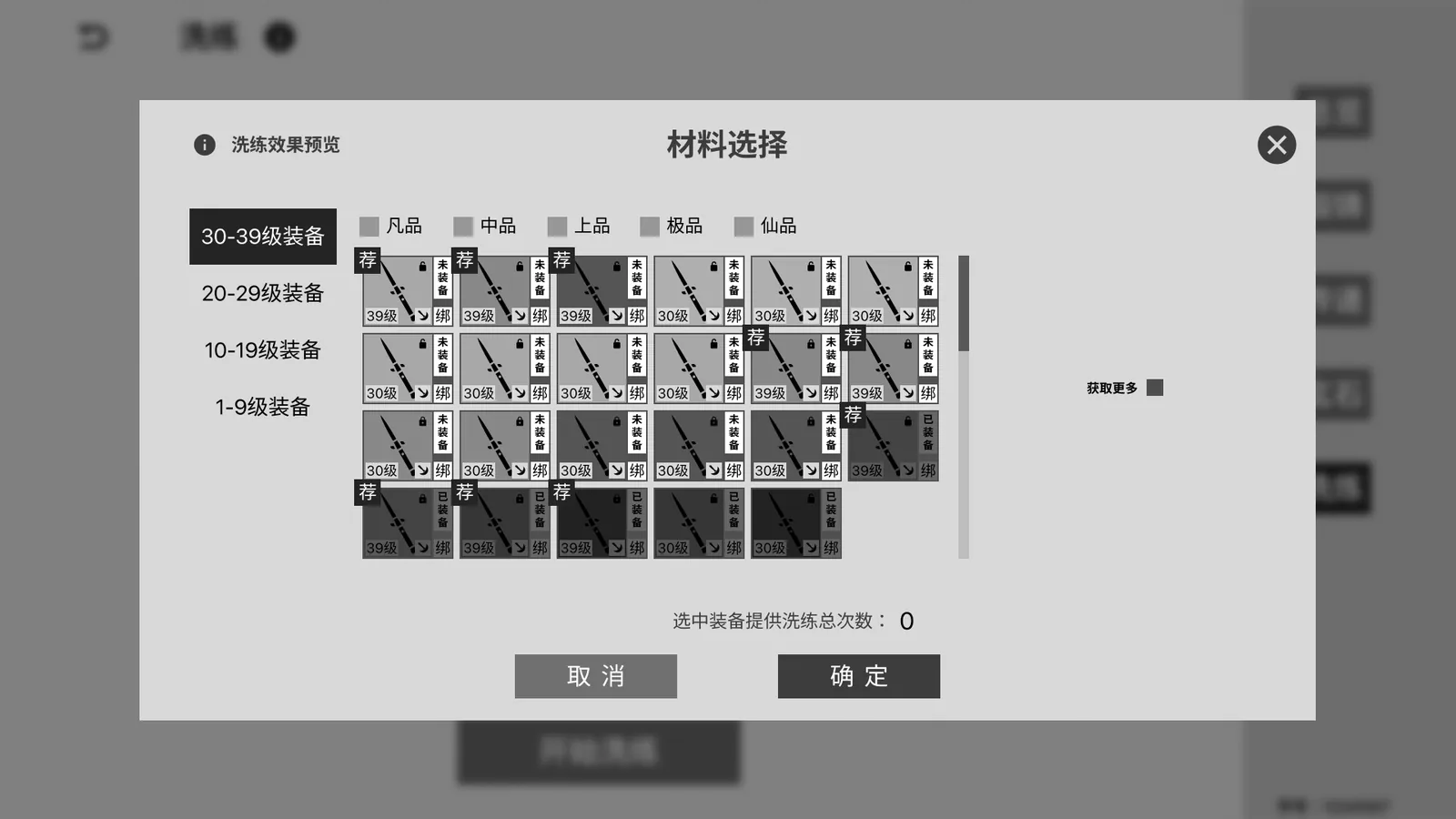
Selection states, equipment details, recommendation explanations, and acquisition routes provide evidence before commitment.
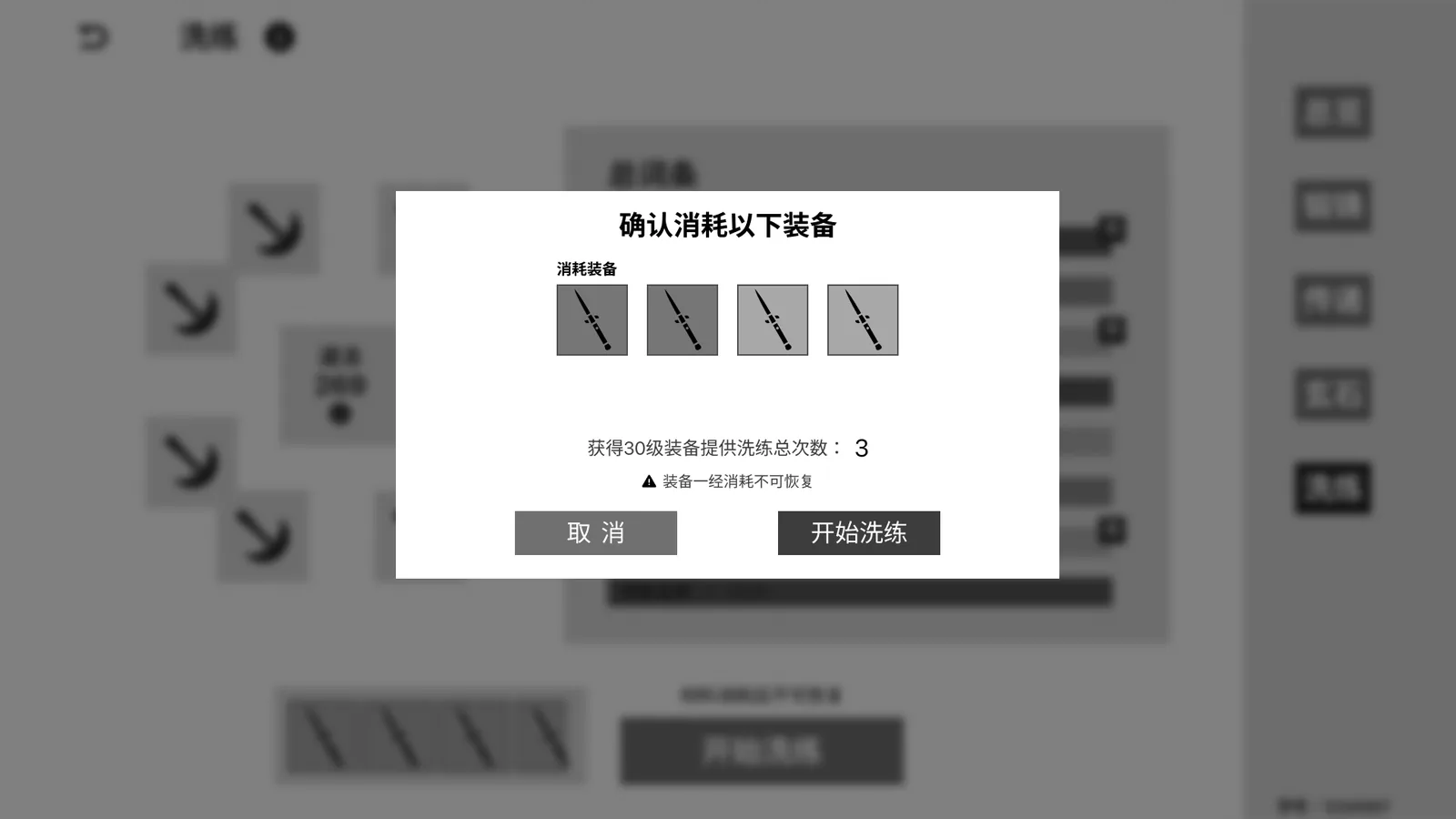
The confirmation shows which equipment becomes reroll attempts before any attempt is spent, making irreversible loss explicit.
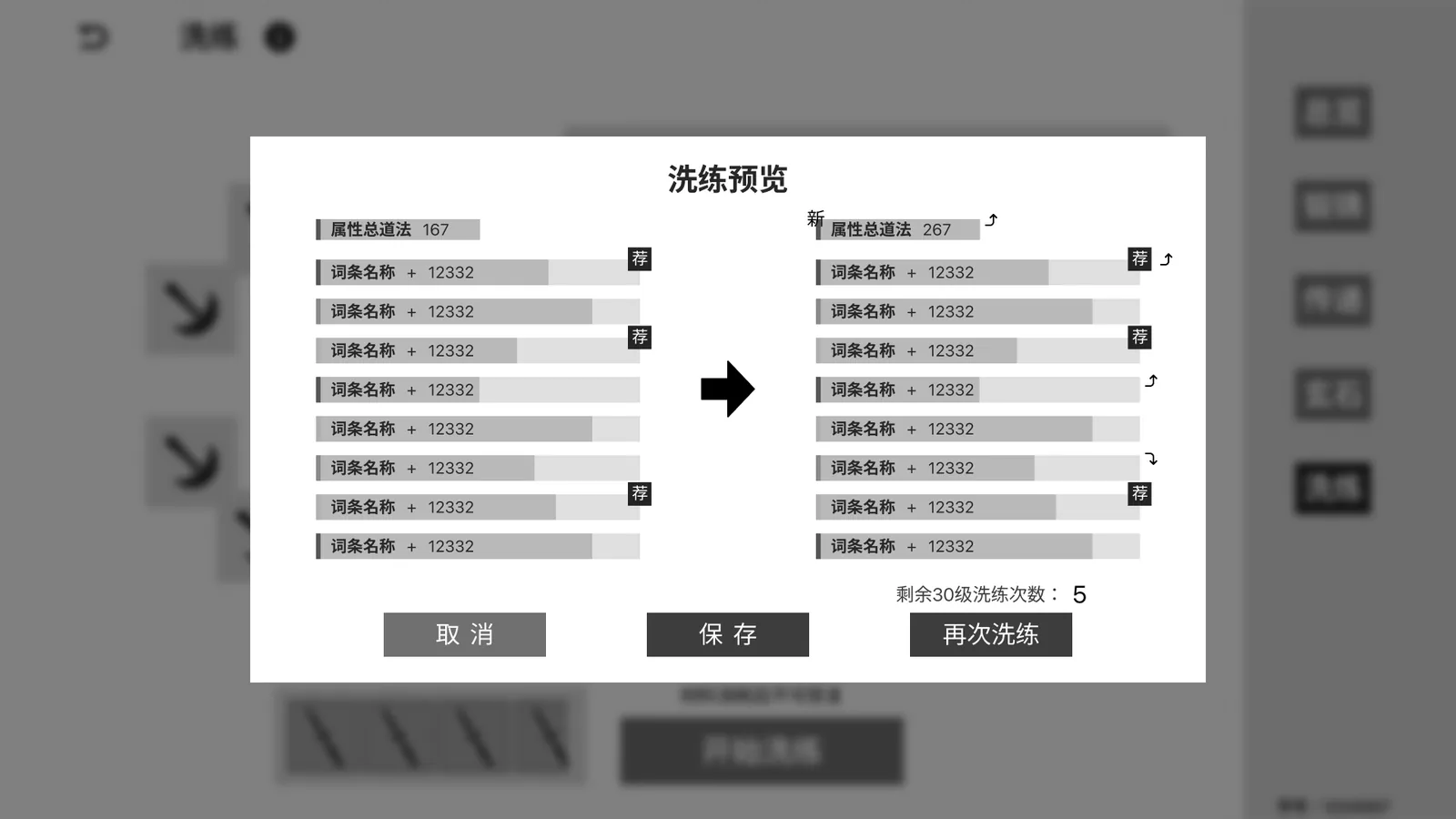
Side-by-side traits and explicit old-or-new labels turn an ambiguous save action into a deliberate choice.
08 · Validation Outcome
The project completed an interaction-optimization case from problem definition to validation: 13 audit findings, a focused comparison with Yanyun Sixteen Sounds, three design principles, four redesigned interfaces, a clickable wireframe, and two rounds of testing. V2 repaired the acquisition loop, made recommendation logic visible, clarified consumption consequences, and replaced ambiguous result labels; all four core validation tasks were completed by all six fresh participants. The result does not prove that every live-game edge case is solved, but it shows that the revised prototype supplied the missing evidence at the decisions tested.
Explain the recommendation, trace the goal, and protect every high-risk action.