Trust runs on appearance
Even when public water meets the standard, invisible information makes it feel like a gamble.


Interaction Design · Physical Computing · Senior Project · 2026
A pebble-shaped sensing device and companion app that turn hard-to-read water data into a glow you can grasp in seconds — and an explanation you can keep asking about.
CCA IxD · Senior Project
At a public fountain, that question has no visible answer. Pebble reads a small set of water-quality signals and replies in layers: a light first, a clear explanation next, a map and an AI when you want more.

01 · The Problem
The project started at an event in San Francisco, where I watched someone drink straight from a public water point. The water may well have been safe — but nothing around them showed why they should trust it. People judge with their eyes: color, smell, clarity. Most real risks are invisible to all three.
The design question that followed: in the few seconds before someone drinks, how can limited water-quality information become feedback that is fast, friendly, and open to follow-up — so uncertainty stops turning into distrust?
Trust runs on appearance
Even when public water meets the standard, invisible information makes it feel like a gamble.
Eyes miss the real risks
Color, smell, and clarity are the usual tests — yet many contaminants pass all three.
Data without meaning
TDS and pH numbers carry no natural meaning for most people; unexplained data adds doubt instead of removing it.
Binary isn't enough
A bare red-or-green verdict is fast but feels absolute — and immediately invites the question "why?"
02 · Research & Testing
Research covered public drinking-water safety, the gap between objective data and human senses, an interview with an environmental expert, and competitive analysis across LARQ, TDS test pens, Tap Score, and public water-information platforms. The main insight: people don't lack data — they lack data that is tied to the moment, quick to grasp, and honest about its own limits.
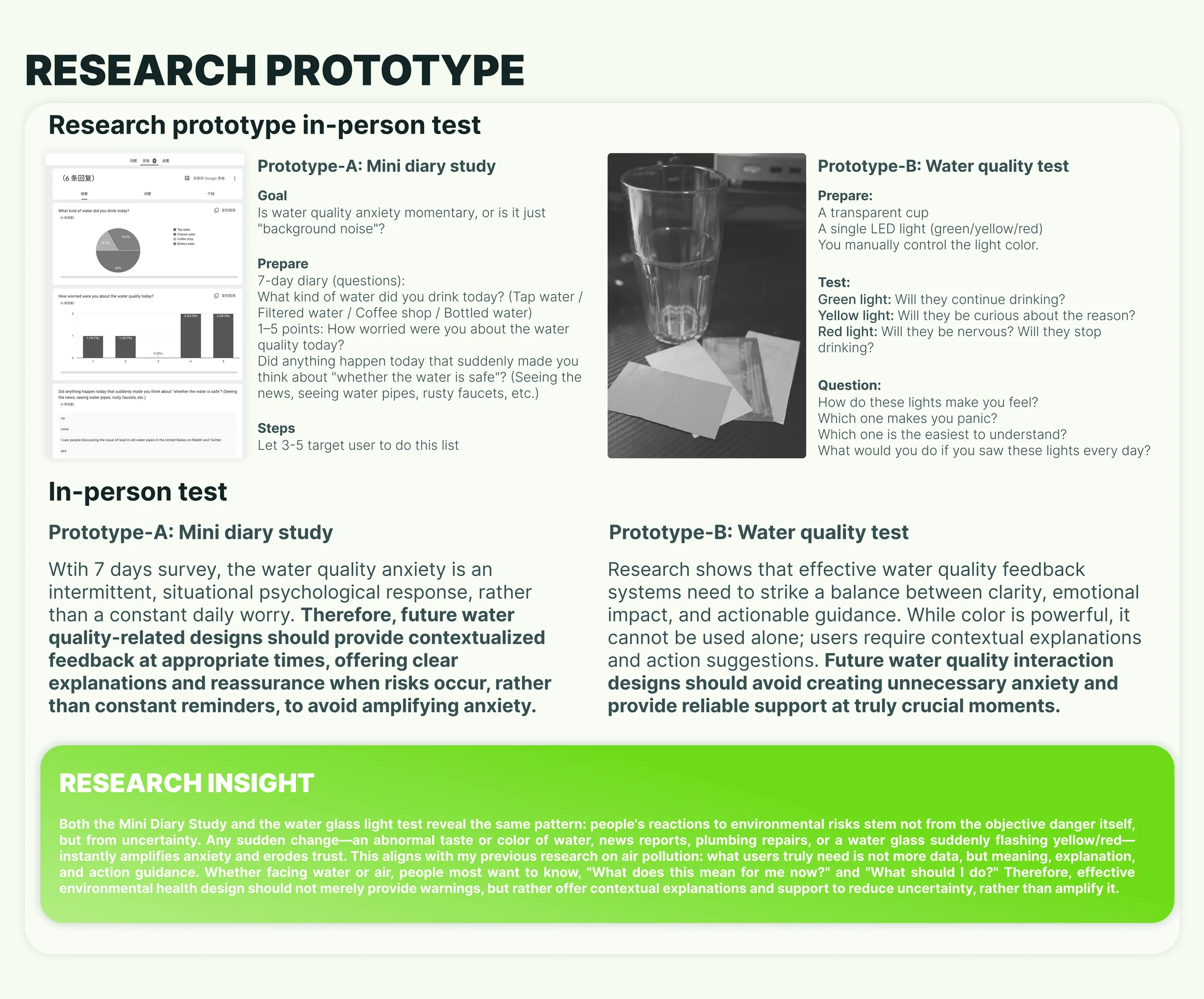
Two rounds of in-person tests then compared intuition against information, and feedback formats against each other. The findings below shaped every later decision.
5/5 trusted their eyes
Every participant first judged the clearer sample as safer — and some doubted the system, not the water, when told otherwise.
Light is the fastest layer
A glow was understood before any on-screen text was read; it became the first feedback layer.
Verdicts invite "why"
Pass/fail alone triggered follow-up questions, and strong binary colors amplified emotion without adding clarity.
Numbers need translation
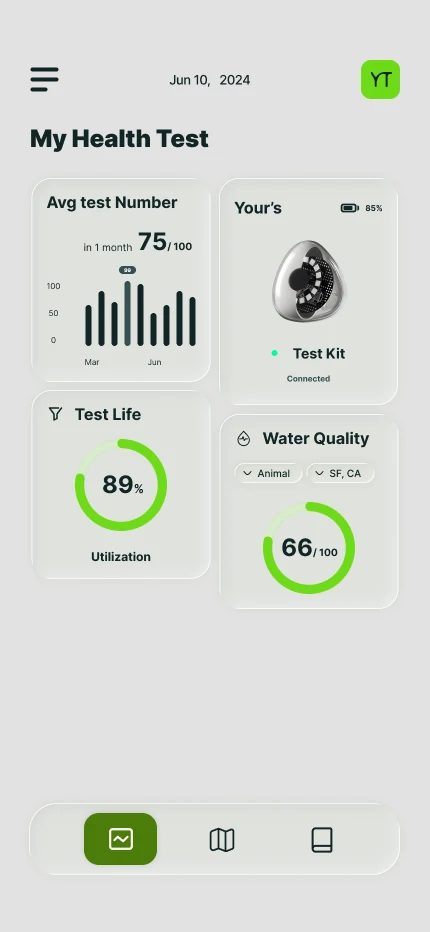
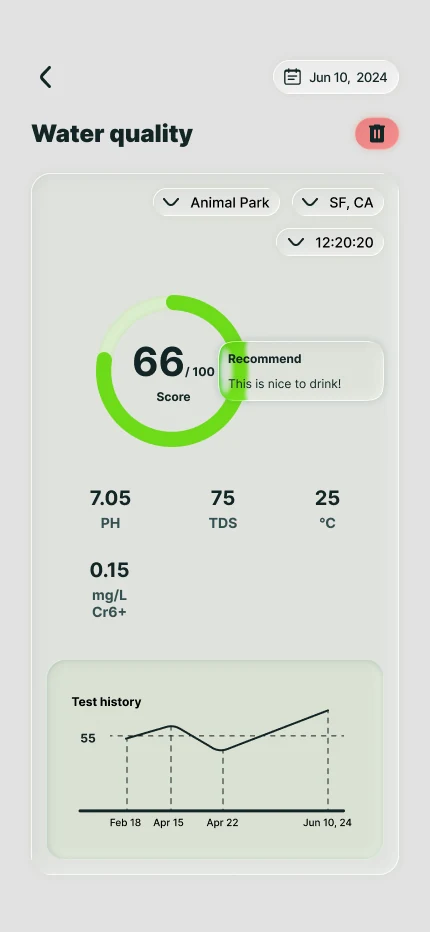
In app testing, "66/100", TDS, and pH still confused non-experts — plain-language states and visible connection status became the fix.
03 · The Device
The final form is close to a real pebble: rounded, restrained, sized for a pocket and a palm. A translucent shell lets the electronics show through just enough to feel honest rather than toy-like, and the friendly geometry avoids the alarm posture of a typical meter. You dip it into a bottle, a cup, or the catch area of a fountain; it wakes on contact, reads a focused set of signals — TDS leading, with temperature and pH explored in concept — and answers with light before any number exists.
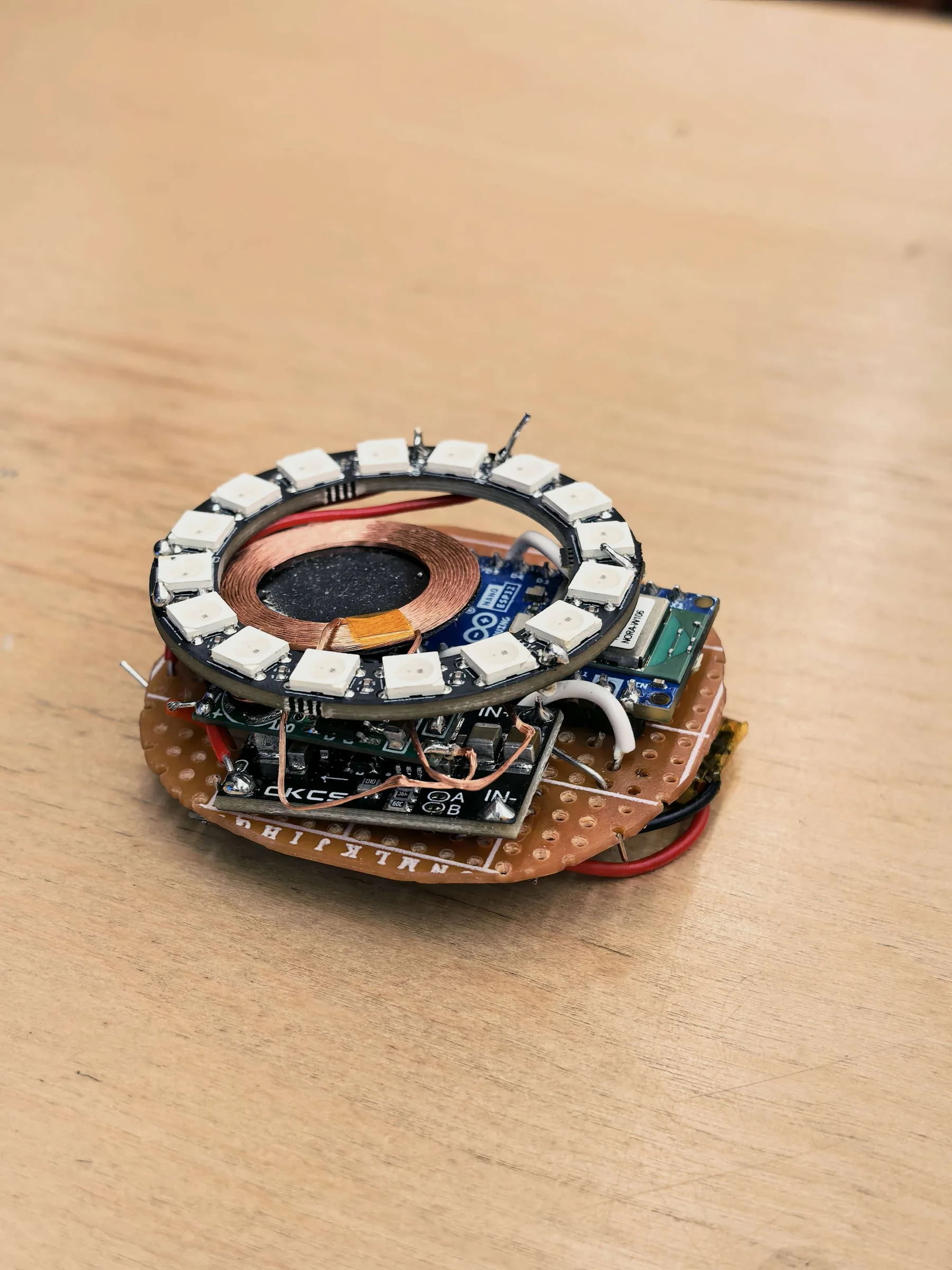
Under the shell, the prototype runs on Arduino with water and trigger sensors, an LED ring, and a Bluetooth link to the phone. It offers an immediate reference within a limited set of metrics — not a complete contaminant analysis, and the system says so.
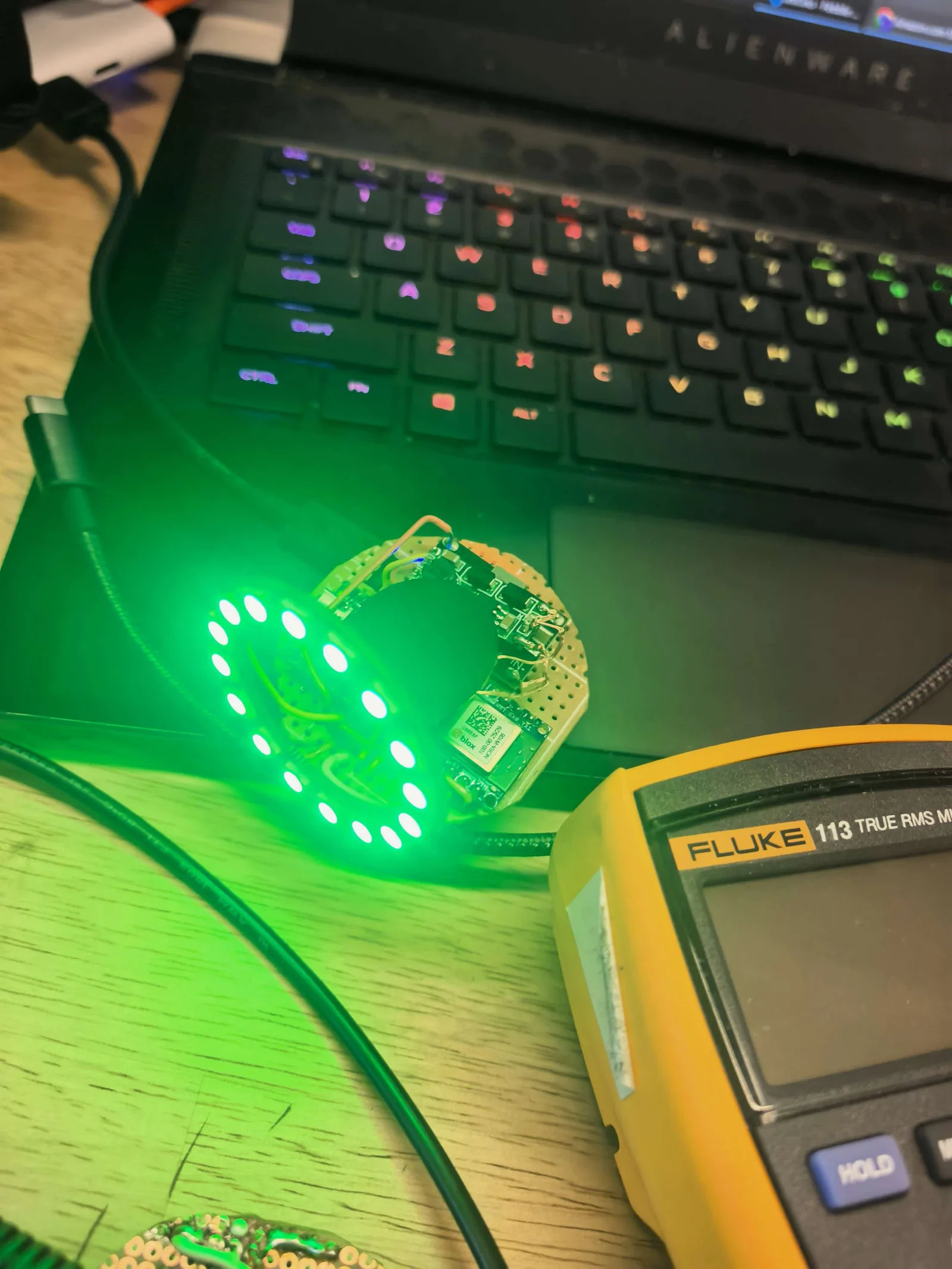
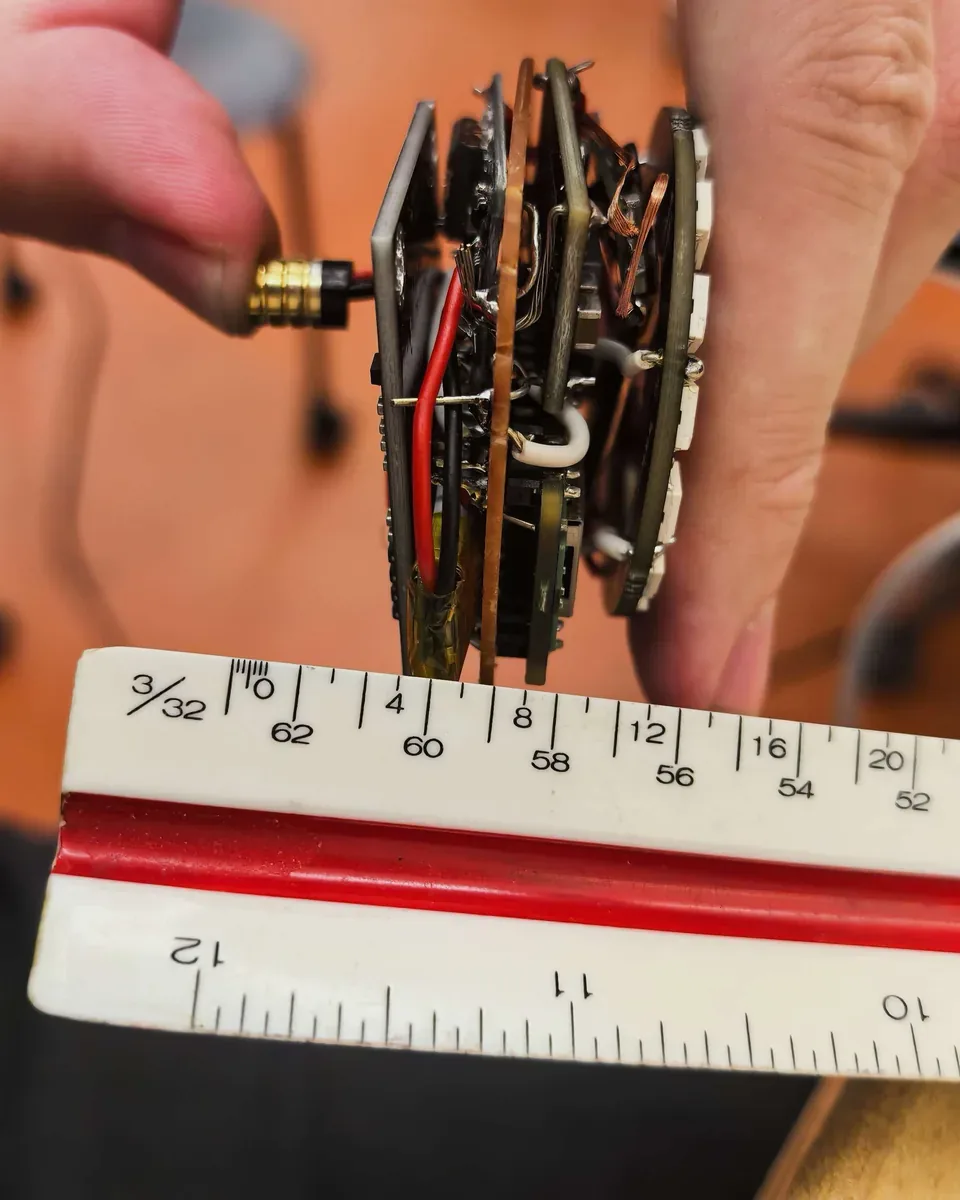
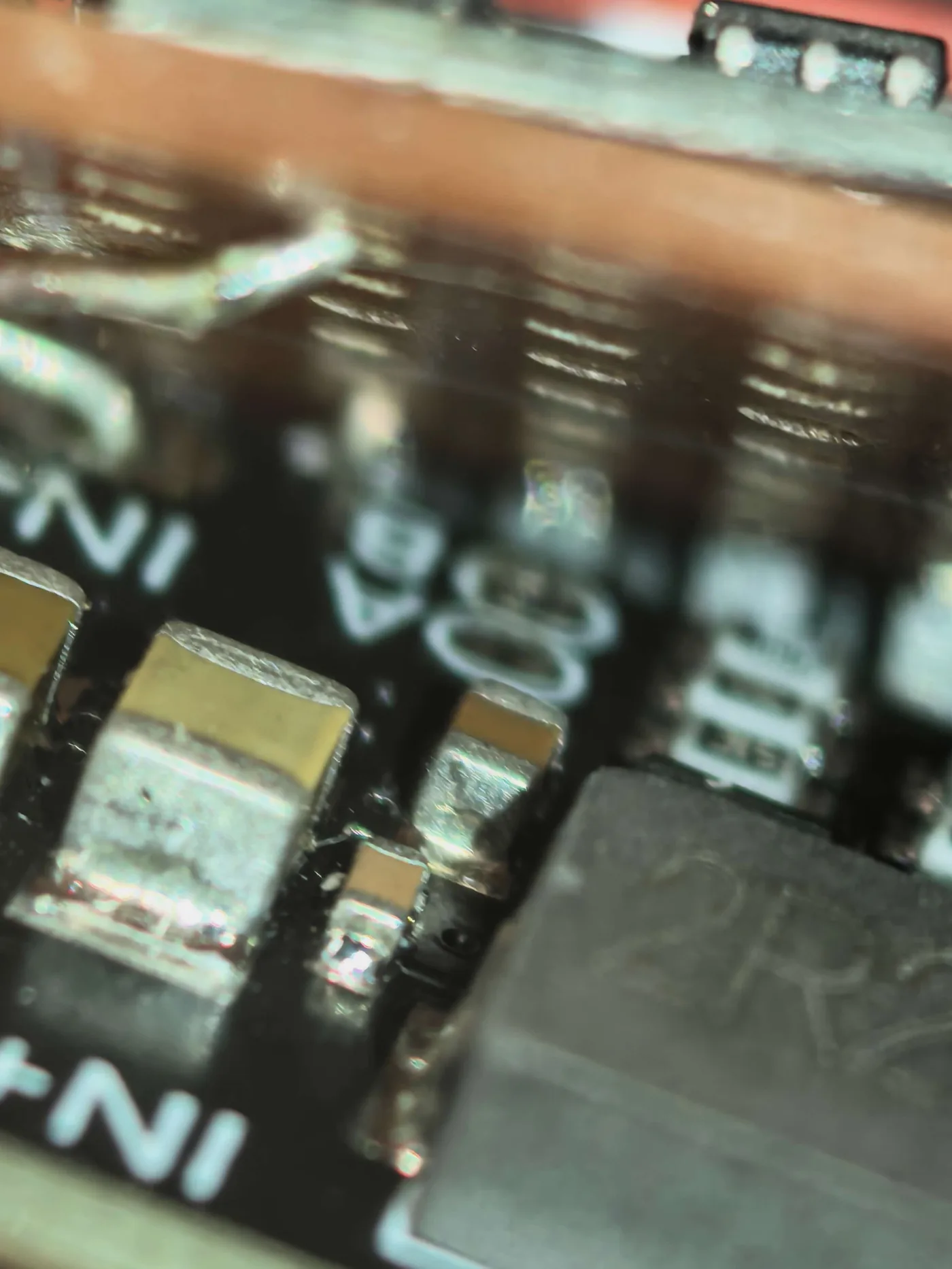
Engineering prototype: sensing stack, feedback ring, and the build that fits in a pocket.
Feedback Layer 01
The first answer is a glow, not a number.
Before the app opens, the ring of light has already said something. Testing showed light was the fastest cue people understood — so the device leads with it, and lets the phone carry the explanation.
Bench clip from the prototype build: the feedback ring running its red state.
04 · The App
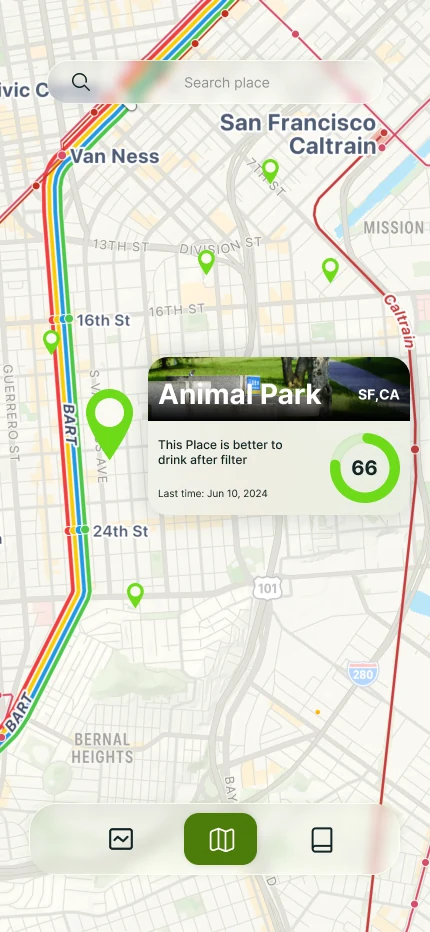
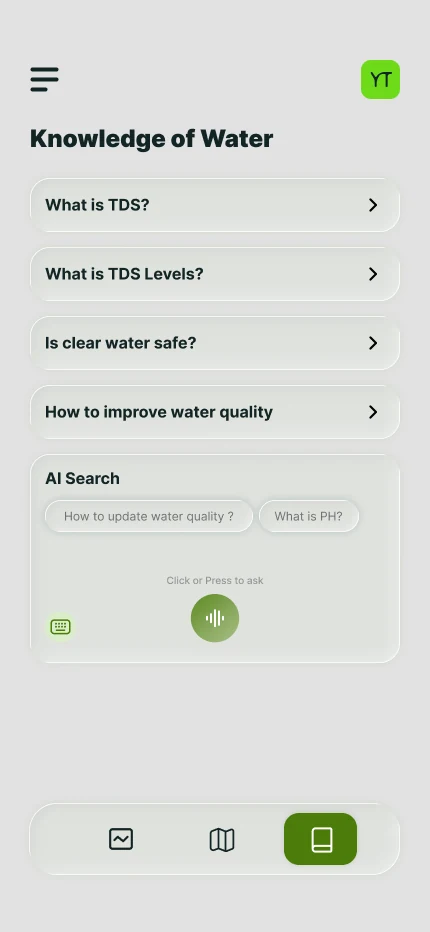
Where the device answers in a second, the app answers "why". Three pages carry the experience: Home shows the connection and the current reading in plain language; Map gathers nearby fountains and accumulated readings; Ask lets an AI explain metrics, results, and next steps. The UI was designed and tested in Figma, then built in Flutter — running on the web in Chrome and packaged as an Android APK.
Honest caveat, by design: in the final prototype some TDS values were still entered manually during testing, so the automatic sensing chain remains an engineering prototype. The complete device-to-app experience, though, is real and working.
05 · The Film
The product film follows one full loop of the system: a questionable-looking tap, a dip of the pebble, the glow, then the app's explanation and the map of what's around.
Alongside it, a vertical exhibition cut shows the device and the app together in the moment the system is designed for — phone-first, shot for the portrait screen.
Product film · Open on Bilibili ↗
Exhibition cut · Open on Bilibili ↗
06 · Exhibition
The final presentation condenses the system into two portrait posters: one carries the promise — "Making water quality easier to trust" — and the other explains how it works, from the four-step use flow to the app's three pages. Beside them, a screen loops the exploded view of the device: shell, ring, stack, and core.
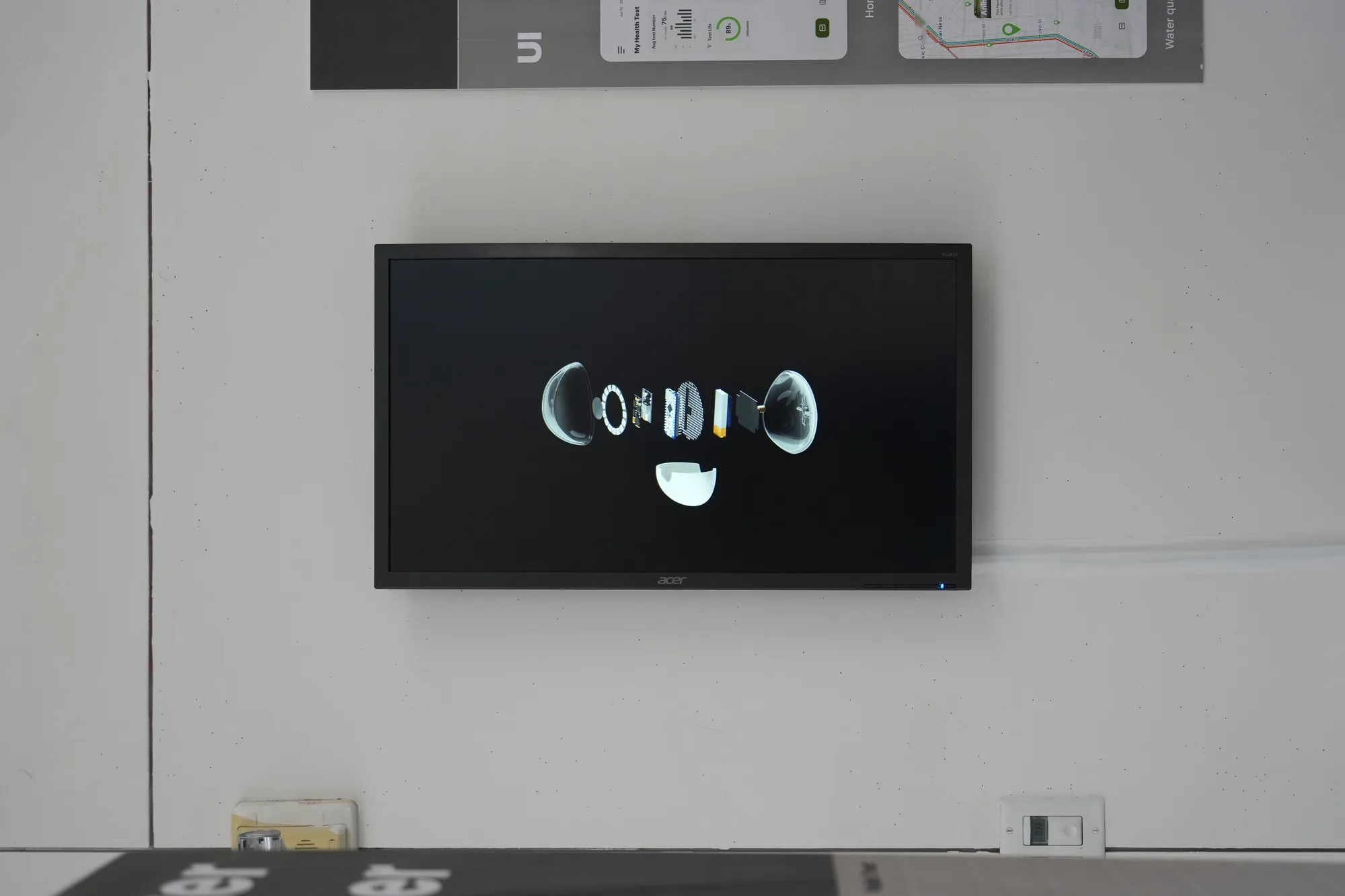
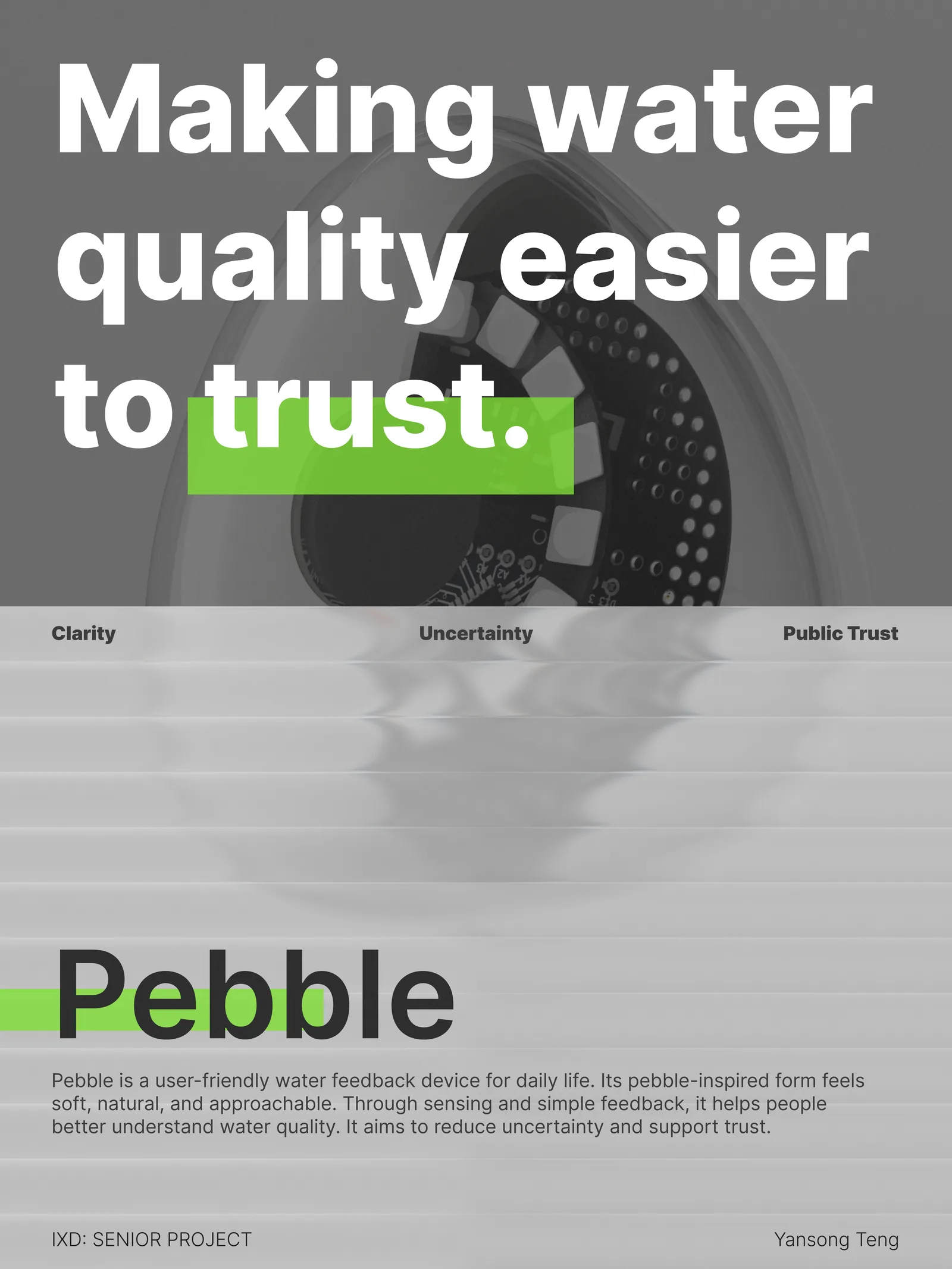
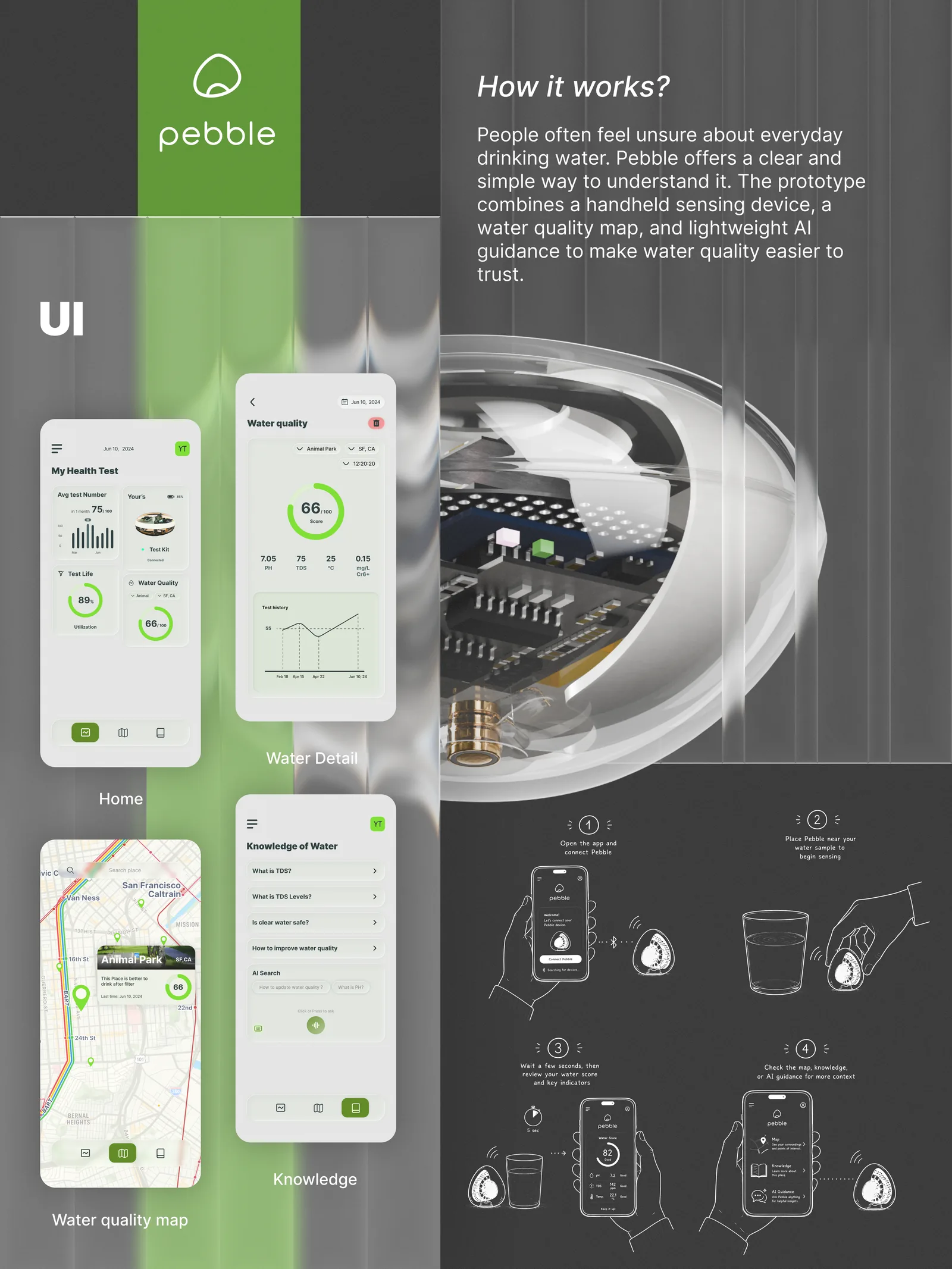
The two-poster exhibition set: clarity of promise on the left, clarity of mechanism on the right.
07 · Reflection
Pebble never claims that a small device solves water safety. Its value is a better relationship with information: abstract metrics become a state you can feel, quick judgment and deep explanation coexist, and the system is explicit about what it checked, what that means, and what it cannot say.
Limited data, stated plainly
Saying what a reading can't tell you builds more trust than pretending it says everything.
Speed and depth together
Light serves the moment; the app serves the follow-up question. Neither works as well alone.
Friendliness lowers the barrier
A pebble gets picked up; a test pen gets left in a drawer. Form decides whether feedback ever happens.
Next iteration
Close the sensing loop — automatic TDS over Bluetooth instead of manual entry — and keep testing how explanation depth affects trust.
See the system in motion — the glow, the app, and the decision moment.