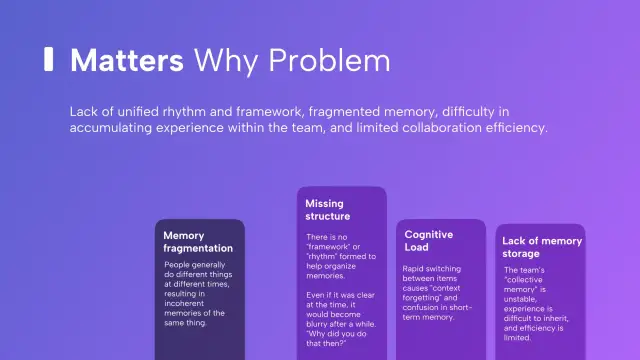
Missing structure
Without a rhythm or framework, something clear today becomes blurry later.


Speculative Design · Memory UX · 2025
If a person could remember every image, conversation, scene, and article, memory would stop being scarce—but attention, retrieval, privacy, and emotional safety would become the new constraints.
Superpower · Total recall
Eidetic Memory turns an impossible superpower into a product question: how should unlimited memories be classified, revisited, and protected?
MEMORY LIBRARY · SPECULATIVE UX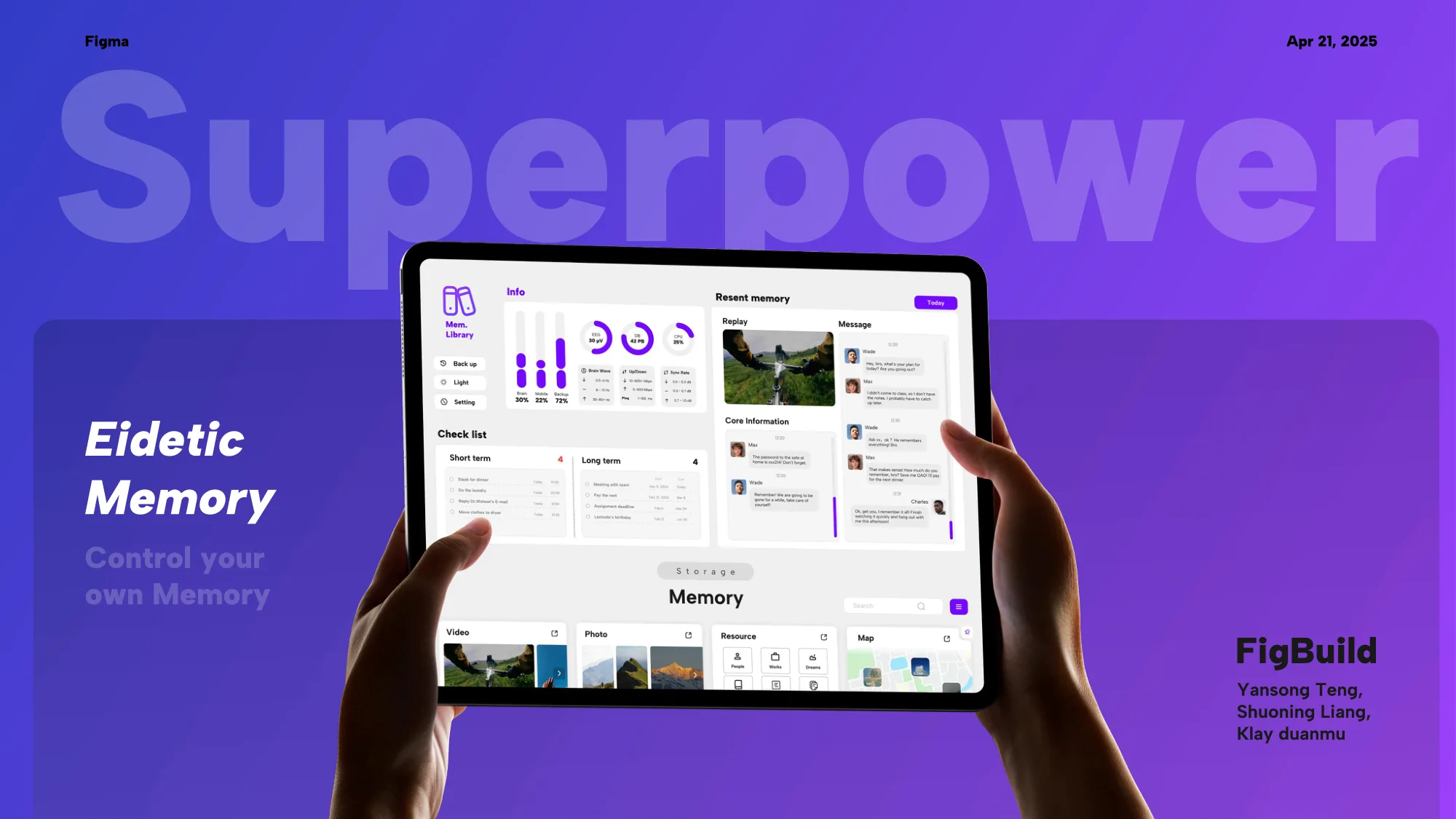
01 · The Present-Day Problem
The project begins with a familiar problem: when work is split across independent projects, people lose the reasoning behind past decisions. Rapid context switching makes memories incomplete, difficult to retrieve, and hard to share with a team.
Without a rhythm or framework, something clear today becomes blurry later.
Switching between projects creates context loss in short-term memory.
Different moments of the same project remain disconnected from one another.
Collective experience is difficult to inherit when the reason behind the work disappears.
02 · The Superpower
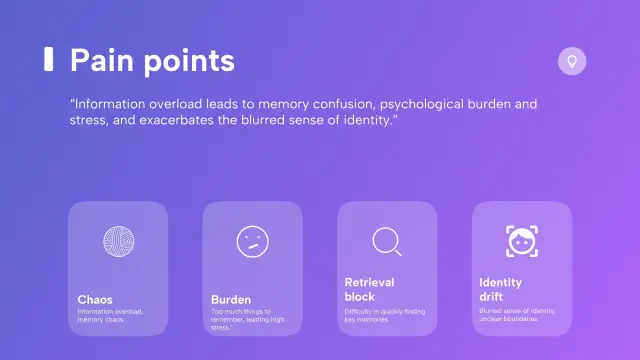
The speculative leap is eidetic memory: one glance permanently stores every detail. It improves acquisition, efficiency, multitasking, and capacity, but endless accumulation can also blur identity and make emotionally difficult memories impossible to leave behind.
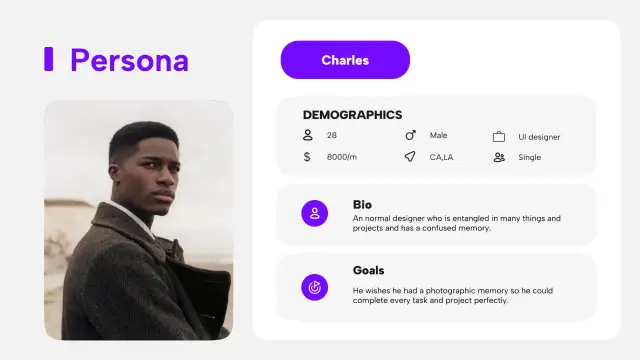
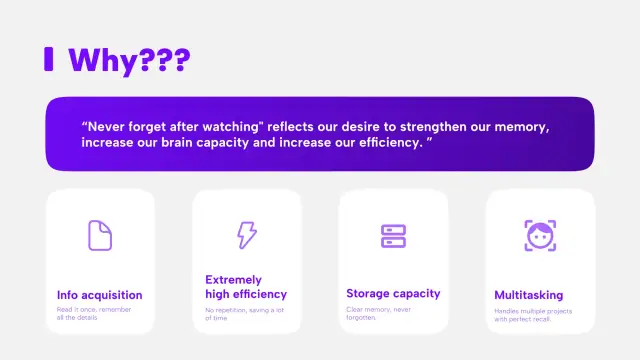
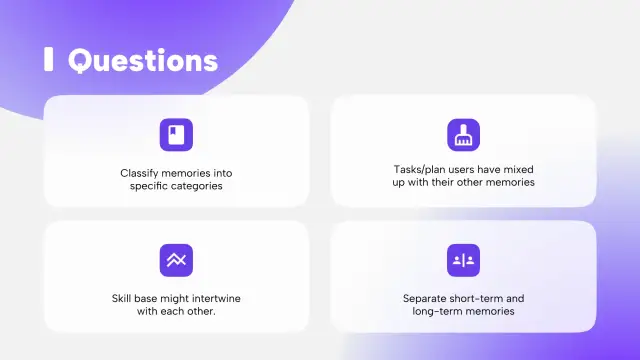
The interface cannot simply expose everything. It needs to turn an infinite record into meaningful groups, recent context, actionable reminders, and deliberate review.
03 · Information Architecture
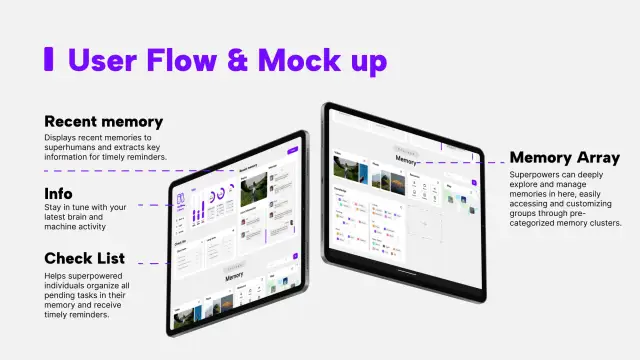
The design translates unlimited recall into four stable entry points. Together they support “what just happened,” “what needs attention,” and “where does this memory belong?” without presenting one endless timeline.
Surfaces current memories and extracts key information for timely reminders.
Shows the latest activity between the person's memory and the connected machine.
Turns remembered commitments into a manageable list with reminders.
Lets people browse, group, and customize memories through pre-classified collections.
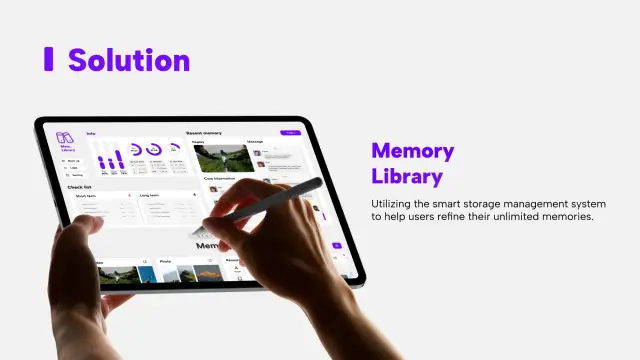
04 · Key Experiences
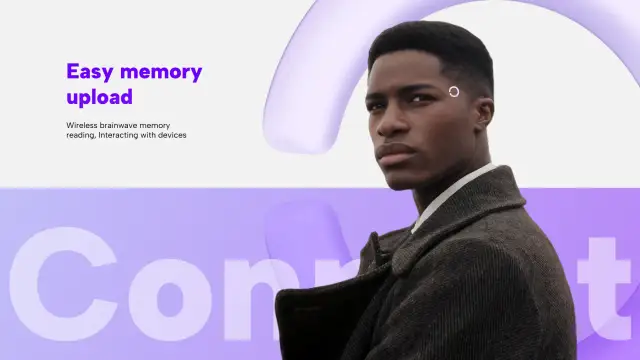
A device connection establishes the bridge between personal recall and the library, turning memory transfer into a visible, deliberate action.
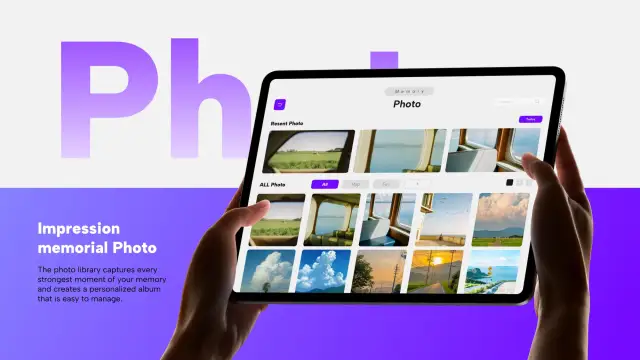
Visual memories become a browsable album organized around strong moments rather than only filenames and folders.
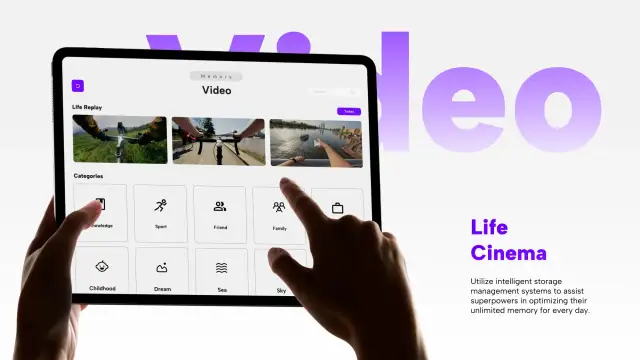
Moving memories are grouped into a life cinema, giving long-form experiences their own review surface.
05 · Edge Cases
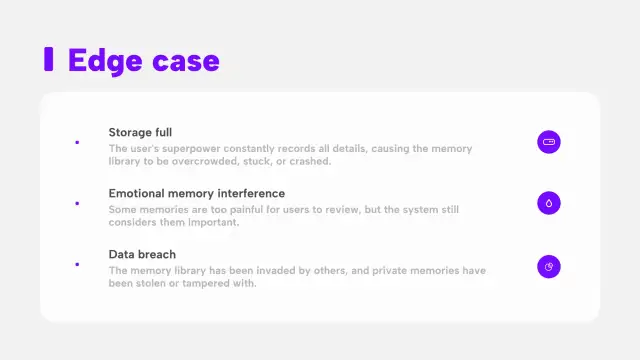
The concept becomes most useful when it stops treating memory as neutral data. Capacity, emotional interference, and unauthorized access all change what “helpful recall” means.
Continuous recording can overcrowd the library and make retrieval less reliable.
The system may identify an important memory that the person does not want to revisit.
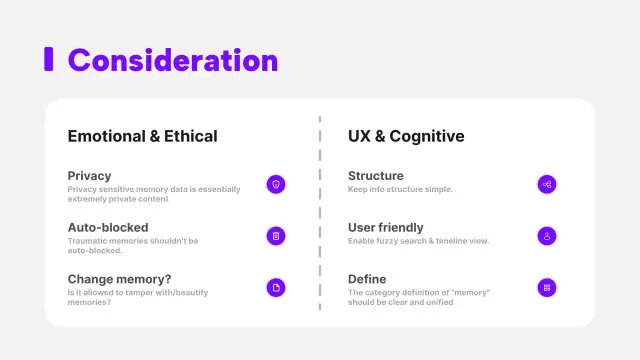
Stolen or altered memories are not ordinary account loss—they affect identity and trust.
Editing, beautifying, hiding, or automatically blocking a memory requires explicit consent.
06 · Visual Direction
Violet gradients make the speculative layer feel energetic and slightly unreal, while large white canvases keep dense personal content calm. Albert Sans and a simple card system create a consistent rhythm across recent memories, albums, checklists, and system status.
When remembering is unlimited, the interface must design for attention, boundaries, and choice.